



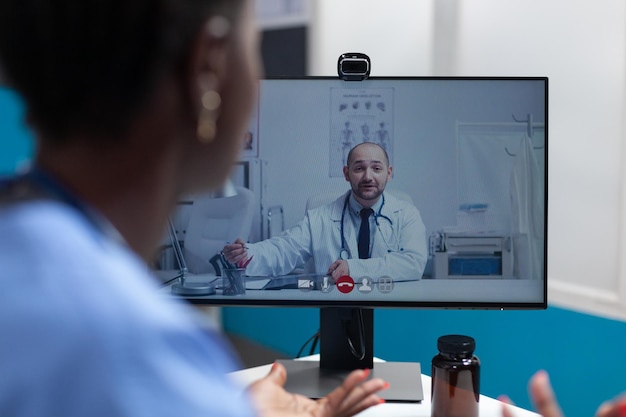
The Promise and Perils of Telemedicine
Unsplash Image Search: telemedicine consultation
The digital age has ushered in a new era of healthcare, where convenience meets innovation at the touch of a button. For adults over 40, a group increasingly managing complex health needs, telemedicine offers both a lifeline and a source of apprehension. How does one navigate this modern marvel while ensuring they receive the quality care they deserve?
Picture this: you’re home, sipping a cup of tea while discussing recent lab results with your healthcare provider. There’s no need to traverse traffic or sit in a waiting room, and yet, this virtual exchange is intimate and direct. However, amid these transformative benefits lie concernsâconcerns about privacy, accuracy, and the loss of personal connection in a digitized healthcare world.
This duality makes telemedicine both enticing and daunting. As more healthcare providers offer these services, the need to understand its potential and pitfalls grows ever more crucial. Let us unpack this evolving landscape, as we explore telemedicine through a lens that considers both its promises and perils.
Convenience Redefined: Bridging Distances
One of the most alluring aspects of telemedicine is the convenience it provides, especially for those juggling multiple responsibilities. Research suggests that patients who live in rural areas or have mobility challenges particularly benefit from having medical consultations at home or work.
Having access to specialists who are miles away is no longer an arduous task. Telemedicine bridges the geographical distances, offering:
-
Immediate access to healthcare professionals without geographic constraints.
-
Reduced wait times for appointments, as virtual queues often move faster.
-
Flexibility to choose appointment times that best fit individual schedules.
The Personal Touch: Will It Endure?
The inherent risk with transitioning to telemedicine is the possibility of losing the personal touch that in-person visits provide. Many adults over 40 value the face-to-face interaction that allows for more detailed physical examinations and the intangible comfort of human connection that screens can’t always replicate.
Experts note that certain conditions might not be adequately addressed without in-person evaluation. A subtle skin change, a nuanced joint issueâsome things require a clinician’s tactile intuition. This is where telemedicine must be complemented by traditional visits to ensure a holistic approach.
Privacy Concerns: Vexing Vulnerabilities
The shift to digital healthcare comes with questions regarding data security. As with all things online, personal and sensitive information is at risk of breaches, prompting concerns about privacy.
While most health systems employ rigorous encryption protocols, patients should remain vigilant. It is advisable to:
-
Verify that your provider uses secure platforms compliant with regulations like HIPAA.
-
Use a private, secure network rather than public Wi-Fi during consultations.
-
Regularly update passwords and employ two-factor authentication where possible.
Care Continuity: Ensuring Consistency
Another challenge in the telemedicine landscape is maintaining the continuity of care. For patients managing chronic conditions, consistent monitoring and documentation are critical. Shifting between in-person and virtual appointments can fragment care, unless managed carefully.
To maintain fluidity and accuracy, consider:
-
Coordinating with your healthcare provider to have a clear outline of which services are best suited for telemedicine.
-
Maintaining detailed records of virtual consultations to share with your primary care physician.
-
Engaging in platforms that integrate seamlessly with traditional healthcare records.
Simple Daily Takeaways
Telemedicine is a dynamic part of modern healthcare, offering both significant advantages and unique challenges. As you consider incorporating it into your health routine, remember these key takeaways:
-
Embrace telemedicine for its convenience, especially for routine consultations.
-
Balance virtual appointments with in-person visits for a comprehensive health approach.
-
Stay informed about data privacy and take steps to protect your personal information.
-
Ensure coordination between your telemedicine consultations and traditional care for consistency.