



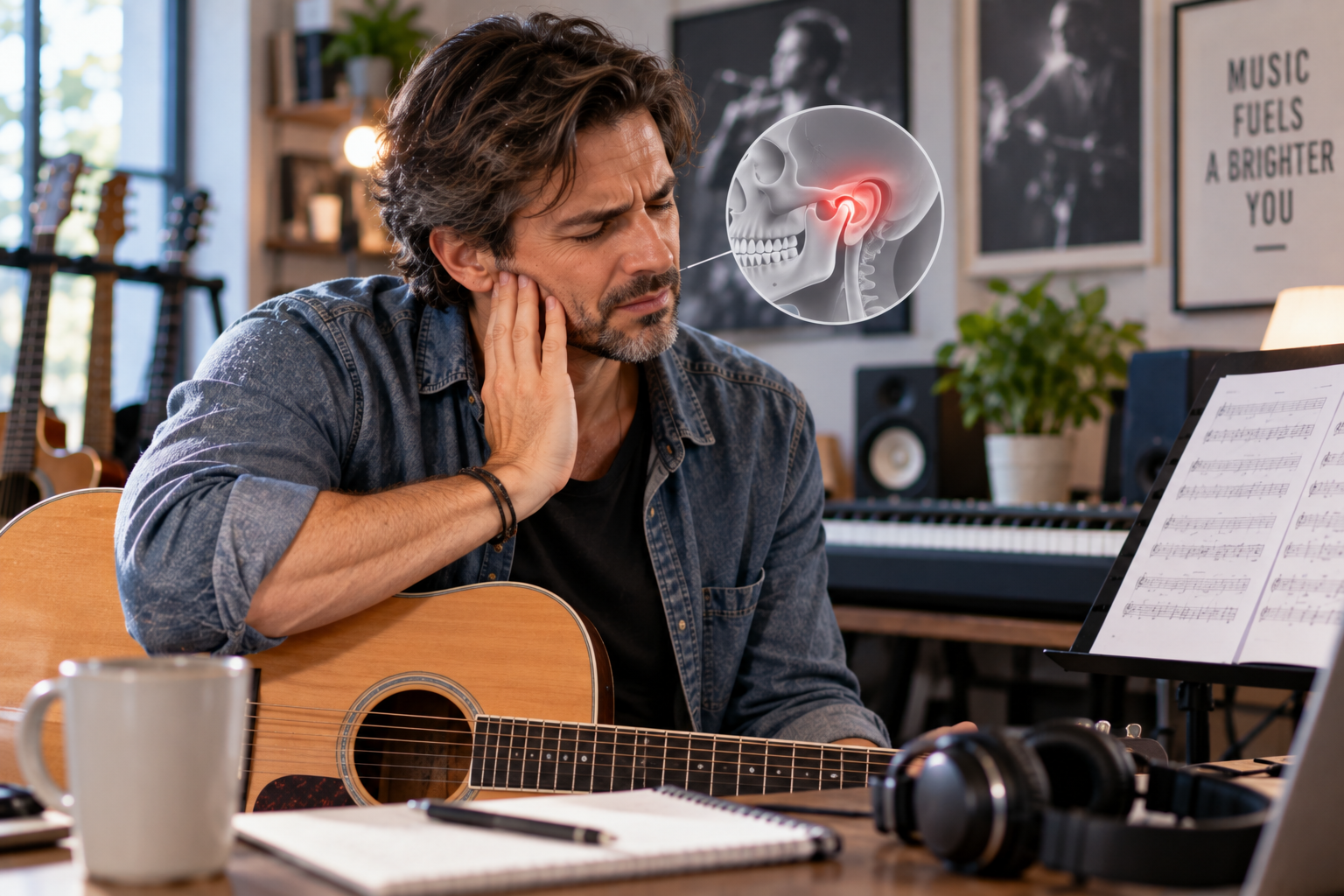
Understanding the often overlooked jaw pain that can affect musicians and its broader implications for health.
KEY STATISTICS
- Approximately 40% of musicians report experiencing chronic pain, with jaw pain being a significant component.
- Studies show that musicians are three times more likely to suffer from musculoskeletal disorders than the general population.
- Research indicates that up to 70% of musicians may experience temporomandibular joint (TMJ) dysfunction at some point in their careers.
For many musicians, the joy of creating melodies can be overshadowed by an insidious discomfort that often goes unnoticed until it becomes unbearable. The subtle ache in the jaw, the tension radiating up to the ears, and the occasional popping sound during movements might seem trivial initially, but these symptoms can herald more significant issues that affect not only performance but overall health and quality of life. As musicians in their late 30s and 40s juggle the demands of their art, work, and family, they may dismiss jaw pain as merely a byproduct of stress or fatigue.
However, understanding the biological and physiological mechanisms behind this pain is crucial for maintaining both their craft and their well-being. This article delves into the nuances of jaw pain in musicians, exploring its causes, implications, and strategies for prevention and management.
How This Affects Your Body and Biology
The human jaw, or mandible, is a complex structure that interacts with various muscles, nerves, and joints, primarily the temporomandibular joint (TMJ). When musicians practice or perform, they often engage in repetitive movements and prolonged positions that can strain these structures. Over time, this can lead to muscle tension, inflammation, and ultimately pain.
The muscles involved include the masseter, temporalis, and pterygoid muscles, which are responsible for jaw movement and stability. Excessive strain on these muscles can cause myofascial pain syndrome, characterized by localized pain and tenderness in the jaw area. Moreover, the TMJ itself can become dysfunctional due to overuse, leading to conditions like bruxism (teeth grinding) or jaw clenching, which further exacerbate pain.
Clinical studies have shown that musicians who play wind instruments or strings are particularly susceptible to these conditions due to the specific demands their instruments place on the jaw. This biomechanical stress can lead to a cascade of issues, including altered bite alignment and even ear pain, complicating the musician’s ability to perform.
- Musicians are prone to myofascial pain syndrome due to repetitive strain on the jaw muscles.
- The temporomandibular joint (TMJ) can become dysfunctional from overuse, leading to serious conditions.
- Bruxism and jaw clenching are common issues that exacerbate pain in musicians.
- Biomechanical stress from instruments can alter bite alignment, impacting overall health.
Why Adults in Their 30s and 40s Face Unique Vulnerabilities
As musicians transition into their 30s and 40s, they encounter physiological changes that can heighten their vulnerability to jaw pain. One significant factor is the natural decline in muscle mass and bone density that begins around this age, which can reduce support for the jaw and surrounding structures. Hormonal changes, particularly in women undergoing menopause, can also impact bone health and muscle function, making them more susceptible to disorders like TMJ dysfunction.
Moreover, the cumulative effect of years of playing—often with improper technique or ergonomics—can lead to chronic issues that become more pronounced with age. Additionally, stress factors unique to midlife, such as career pressures or family responsibilities, can contribute to muscle tension and exacerbate jaw pain. This demographic often has less time for self-care, making it crucial to recognize the importance of preventive health measures.
Understanding these vulnerabilities allows musicians to take proactive steps toward managing their health.
- Natural decline in muscle mass and bone density increases susceptibility to jaw pain.
- Hormonal changes, especially in women, impact bone health and muscle function.
- Cumulative stress from years of playing can lead to chronic jaw issues.
Warning Signs and Early Symptoms to Watch For
- Persistent jaw ache that lasts for more than a few days, indicating potential underlying issues.
- Frequent headaches that may be linked to jaw tension or TMJ dysfunction.
- Clicking or popping sounds when opening or closing the mouth, suggesting TMJ problems.
- Difficulty chewing or discomfort while eating, potentially signaling muscle or joint strain.
- Ear pain or discomfort, which can be referred pain from jaw issues.
- Stiffness in the jaw muscles or limited range of motion, indicating muscle fatigue or dysfunction.
Evidence-Based Diet and Lifestyle Strategies That Work
Incorporating evidence-based strategies into daily routines can significantly alleviate jaw pain and promote overall musculoskeletal health. A balanced diet rich in anti-inflammatory foods—such as omega-3 fatty acids from fish, antioxidants from colorful fruits and vegetables, and whole grains—can help reduce inflammation and support muscle recovery. Staying hydrated is equally important, as dehydration can exacerbate muscle tension.
Additionally, regular physical activity that focuses on stretching and strengthening the neck, shoulders, and jaw can mitigate the effects of strain. Techniques such as yoga or Pilates can enhance flexibility and posture, which are crucial for musicians who spend long hours practicing. Mindfulness practices, including meditation and breathing exercises, can also reduce stress, decreasing the likelihood of muscle clenching and tension in the jaw.
- Incorporate anti-inflammatory foods like fatty fish and colorful fruits.
- Stay hydrated to prevent muscle tension exacerbated by dehydration.
- Engage in regular physical activity focusing on flexibility and posture.
- Practice mindfulness techniques to reduce stress and muscle clenching.
Your Daily Action Plan Checklist
- Incorporate a balanced diet rich in anti-inflammatory foods into your meals.
- Engage in daily stretching and strengthening exercises for your jaw and neck.
- Practice mindfulness or relaxation techniques for at least 10 minutes daily.
- Schedule regular check-ups with a healthcare provider to monitor jaw health.
- Limit caffeine and alcohol intake, as these can contribute to muscle tension.
- Consider using a mouthguard if bruxism is suspected, especially during sleep.
The Overlooked Role of Sleep, Stress, and Systemic Health
Sleep quality plays a pivotal role in managing jaw pain and overall health. Poor sleep can exacerbate pain sensitivity and lead to increased muscle tension, resulting in a vicious cycle of discomfort. Research indicates that irregular sleep patterns can raise cortisol levels, further contributing to inflammation and muscle tightness.
Musicians, often subjected to irregular schedules due to performances, may find their circadian rhythms disrupted, amplifying their risk for jaw pain. Moreover, chronic stress is another critical factor that can amplify jaw issues. Elevated stress levels can lead to increased muscle tension and bruxism, as individuals unconsciously clench their jaws in response to anxiety.
Recognizing the interconnectedness of sleep, stress, and systemic health is essential for musicians seeking to manage their well-being effectively.
- Poor sleep quality can increase pain sensitivity and muscle tension.
- Elevated cortisol levels from stress contribute to inflammation.
- Irregular sleep patterns can disrupt circadian rhythms, exacerbating jaw pain.
Bottom Line
Musicians face unique and often overlooked challenges regarding jaw pain, particularly as they navigate the complexities of aging and performance demands. By understanding the biological mechanisms behind this discomfort and implementing proactive lifestyle strategies, musicians can not only alleviate their symptoms but also enhance their overall health and longevity. Awareness and early intervention are crucial—taking action today can lead to a more harmonious and pain-free musical journey.
Health Of State — always consult a qualified healthcare provider before making changes to your health routine.
Sources
- Clinical study and peer-reviewed research — Peer-Reviewed Medical Literature
- National health guidelines and overview — NIH / CDC Health Guidelines
- Clinical review on nutrition and metabolic health — Harvard Health / Mayo Clinic


