



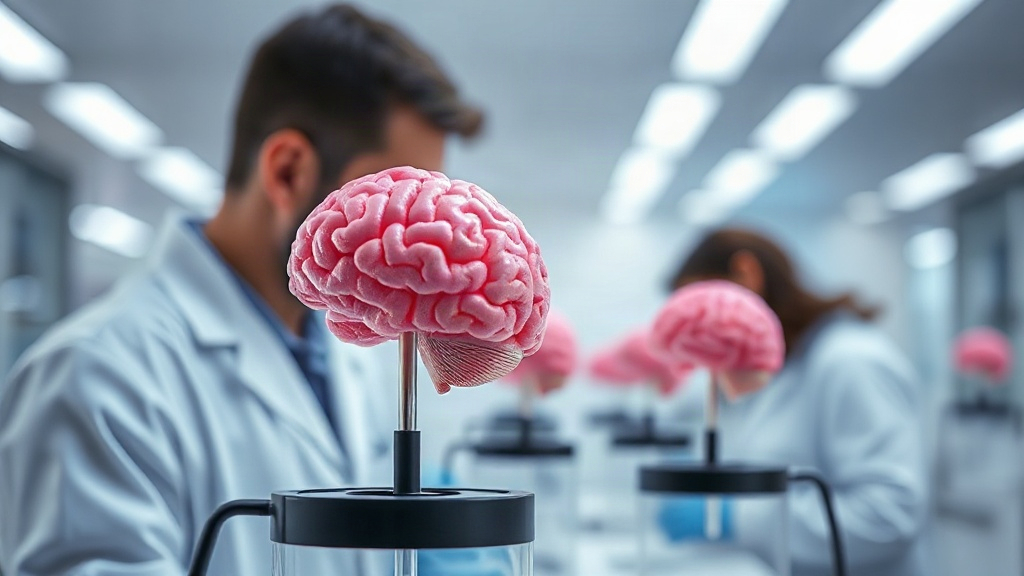
*How scientists are using human brain organoids to understand seizures—and what it means for your treatment options.*
KEY STATISTICS
- Brain organoids are three-dimensional tissue models grown from human stem cells that mimic early brain development.
- Researchers use these models to study how genetic mutations linked to epilepsy disrupt normal brain function.
- Organoid research has already revealed cellular mechanisms of seizure disorders that traditional lab methods could not detect.
If you or someone you care about lives with epilepsy, you know how unpredictable seizures can be. Scientists are now turning to an unexpected tool: miniature human brains grown in laboratory dishes. These so-called brain organoids are helping researchers understand exactly what goes wrong in the brains of people with seizure disorders—and they’re revealing new pathways for treatment that could eventually change how epilepsy is managed.
What Brain Organoids Actually Are
Brain organoids are three-dimensional tissue cultures that develop from human stem cells and self-organize into brain-like structures. Unlike traditional flat cell cultures or animal models, organoids better mimic the complexity of actual human brain tissue, including the layered organization and cellular diversity found in real brains.
- Grown from human stem cells in specialized growth conditions, organoids develop multiple brain cell types in realistic spatial arrangements.
- They recapitulate early brain development, allowing researchers to watch how genetic mutations affect neural formation step by step.
- Current technology can model regional brain structures—cortical organoids, cerebellar organoids—with increasing precision and complexity.
- Unlike animal models, organoids carry human genetic variants, offering direct insight into seizure biology relevant to actual patients.
Why Mid-Life and Beyond Matters
Epilepsy onset varies widely across the lifespan, with peaks in childhood and again in adults over 60. Adults in the 35–70 age range often live with long-standing epilepsy acquired earlier, or face new-onset seizures linked to stroke, brain injury, or neurodegeneration—conditions where organoid research offers particular promise.
- Adults over 35 with drug-resistant epilepsy benefit most from research into novel mechanisms, since current medications don’t control seizures in roughly one-third of patients.
- Older adults face unique risk factors—acquired brain injury, metabolic changes, medication interactions—that organoid models can now address more accurately than before.
- Understanding how epilepsy-linked genetic mutations express differently across aging brain tissue could lead to age-targeted therapies.
- Organoid research is uncovering why some seizures persist and why medication resistance develops—knowledge critical for this age group’s treatment options.
Signs Organoid Research Matters for You
- You’ve tried multiple seizure medications without full seizure control.
- Your seizures began after brain injury, stroke, or head trauma.
- Family members have epilepsy, suggesting genetic or familial forms of the disorder.
- Your neurologist has mentioned genetic testing or mentioned unidentified causes for your seizures.
- You experience breakthrough seizures despite medication adjustments over several years.
How Lifestyle Supports Treatment Today
While organoid research happens in the lab, lifestyle changes remain your first line of defense. Medication adherence, sleep consistency, stress management, and seizure triggers all influence your seizure frequency—and understanding the biology behind seizures may soon mean more personalized guidance on which lifestyle factors matter most for your particular type of epilepsy.
- Consistent sleep schedules and adequate sleep duration reduce seizure risk; organoid studies are clarifying sleep-seizure mechanisms at the cellular level.
- Stress management and avoiding known triggers remain foundational; future organoid-based therapies may target stress-related seizure pathways more precisely.
- Medication adherence is non-negotiable; organoid research may soon help identify which patients will respond to specific drugs before starting them.
- Regular follow-up with your neurologist ensures seizure patterns and medication side effects are tracked—critical data as new therapies emerge from organoid research.
Your Action Plan Now
- Ask your neurologist whether genetic testing is appropriate for your type of epilepsy; organoid research is making genetic testing more informative.
- Keep a detailed seizure diary (date, time, triggers, medication taken, sleep quality) to help your doctor identify patterns and adjust treatment.
- Maintain your current medication schedule consistently—organoid research won’t help if breakthrough seizures occur due to missed doses.
- Discuss clinical trials with your neurologist; organoid-based research is beginning to inform next-generation drug trials.
- Review your sleep, caffeine, and stress patterns with a family member or clinician; understanding your personal triggers helps you and your doctor prepare for future personalized treatments.
The Sleep-Seizure Link in the Lab
Sleep disruption is both a trigger and a consequence of epilepsy—and organoid research is beginning to reveal why. Scientists are using brain organoids to study how epilepsy-linked mutations affect the neural circuits that control sleep-wake cycles, a discovery that could explain why many patients report worse seizures after poor sleep.
- Organoid models show how certain genetic mutations disrupt circuits that regulate circadian rhythms and sleep architecture.
- Understanding sleep disruption mechanisms at the cellular level may lead to sleep-targeted therapies that reduce seizure risk.
- Current research suggests the bidirectional relationship between poor sleep and seizures may be addressable through future precision interventions.
- For now, protecting your sleep schedule remains one of the most evidence-based steps you can take while organoid therapies are being developed.
Bottom Line
Brain organoids represent a fundamental shift in how researchers understand epilepsy—moving from animal models and broad theories to direct observation of human brain tissue in development and disease. For adults living with epilepsy, especially those with drug-resistant seizures or genetic forms of the disorder, this research offers hope that future treatments will be more precise, more effective, and tailored to your individual biology. Today, your best action is medication adherence, seizure tracking, and honest conversations with your neurologist about genetic testing and clinical trial opportunities as organoid discoveries move into human application.
Health Of State — always consult a qualified healthcare provider before making changes to your health routine.
Sources
- Epilepsy Currents — Recent advances in organoid modeling of epilepsies — PubMed / Epilepsy Currents
- General information on epilepsy and seizure disorders — Mayo Clinic
- Stem cell and organoid research overview — National Institutes of Health (NIH)


