



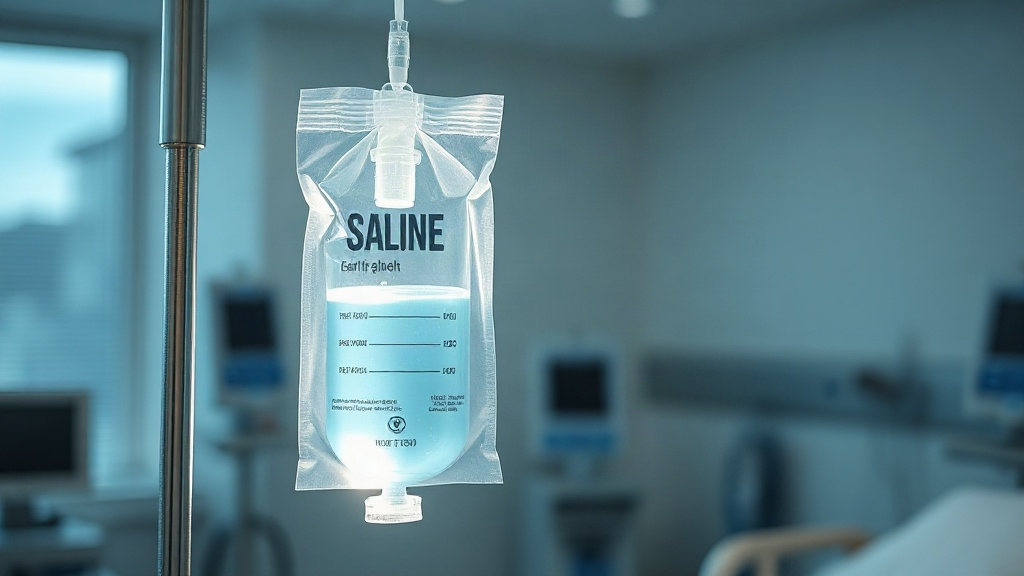
A contamination alert affects patients relying on medical-grade saline—here’s what to know and do.
KEY STATISTICS
- Medical saline solutions are among the most commonly used IV fluids in hospitals, clinics, and home care settings nationwide.
- Fiberglass contamination poses a physical hazard that can enter the bloodstream if undetected before administration.
- Patients aged 35–70 on chronic IV therapies or frequent hospital care face the highest exposure risk.
If you or a family member receives intravenous fluids—whether for chronic illness, post-surgical recovery, or routine medical care—a recent recall of contaminated medical saline should be on your radar. Manufacturers have flagged saline bags and bottles potentially contaminated with fiberglass particles, a discovery that underscores a real but often overlooked risk in hospital and clinical settings. Understanding what happened, who is most at risk, and what steps to take right now can help you protect yourself and advocate effectively with your healthcare team.
How Contamination Occurs
Medical-grade saline is a sterile solution of sodium chloride and water designed to be completely free of foreign material before it enters your vein. Fiberglass contamination—typically from manufacturing equipment or packaging—represents a physical hazard that standard visual inspection may miss until particles are already suspended in the fluid bag.
- Fiberglass fibers are extremely small and can pass through normal manufacturing filters if quality controls fail.
- Once in the bloodstream, particles can trigger inflammation, clotting, or localized tissue damage depending on size and quantity.
- Contamination is often discovered only after manufacture, during pharmacy checks, or in rare cases after patient administration.
- Unlike bacterial or chemical contamination, fiberglass does not produce obvious cloudiness, discoloration, or odor.
Why Your Age Group Is Exposed
Adults in their late 30s through 70s are disproportionately affected because this age group receives IV therapies more frequently—for cancer treatment, dialysis, chronic pain management, post-surgical care, and acute hospitalizations. Long-term or repeated IV exposure multiplies the window of risk over months or years.
- Chronic conditions requiring regular IV therapy (heart disease, diabetes complications, kidney disease) are more common after age 50.
- Older adults undergoing surgery or hospitalization receive IV fluids as standard protocol, sometimes over multiple stays.
- Cumulative IV exposure over years increases total contamination risk, even if individual batches are rare.
- Age-related immune changes may make older patients more susceptible to inflammatory or thrombotic responses to foreign particles.
Warning Signs to Watch For
- Unusual pain, burning, or swelling at the IV site during or immediately after infusion.
- Fever, chills, or signs of infection appearing within hours to days after receiving saline.
- Unexplained shortness of breath, chest tightness, or leg swelling—possible signs of a blood clot or pulmonary complication.
- Visible particles, cloudiness, cracks, or discoloration in the saline bag or bottle before administration.
- Persistent joint or muscle pain, numbness, or tingling in the extremity that received the IV—delayed inflammatory response.
- Elevated white blood cell count or abnormal labs days after IV administration without another clear cause.
Practical Steps You Can Take Now
If you are receiving IV saline, proactive communication with your care team and careful monitoring of your medical setup are your best defenses. Request transparency about product sourcing and batch numbers, and stay alert to your body’s responses during and after infusion.
- Ask your nurse or pharmacist to visually inspect the saline bag or bottle before connection—check for particles, cracks, or cloudiness.
- Request the lot or batch number of any saline you receive and keep a written record for your personal health file.
- Inform your healthcare provider of this recall and ask whether the facility has issued any internal product holds or substitutions.
- If you receive regular IV therapy at home, work with your care provider to confirm your saline supply is not on the recall list.
Your Action Checklist
- Contact your primary care doctor or specialist if you receive IV fluids routinely—ask if your usual saline brand is affected.
- Check the FDA website or your pharmacy’s recall notification system for the specific lot numbers of any saline you have received.
- Document your IV administration history (dates, locations, product brands) over the past 6–12 months for reference.
- Report any new or unexplained symptoms to your healthcare provider within 24 hours and mention potential saline exposure.
- Ask your hospital or clinic whether they have verified their current saline supply and can provide written confirmation.
- If you discover you received recalled saline, notify your doctor immediately and request follow-up labs or imaging if appropriate.
- Keep all packaging, lot numbers, and administration records—this information may be needed for insurance claims or legal inquiry.
The Trust Factor: Facility Communication
The role of healthcare facility transparency is often overlooked in contamination events. Your clinic, hospital, or home care provider should proactively communicate about recalls and verify product safety—yet many patients hear about issues only by accident or when symptoms arise. Asking direct questions about product sourcing and safety protocols signals to your care team that you are an engaged patient and may prompt them to double-check their own systems.
- Facilities are required to report contamination incidents to the FDA, but patient-facing communication timelines vary widely.
- Smaller clinics or home care agencies may lack robust recall-tracking systems compared to large hospital networks.
- Your pharmacy can often cross-reference recalled lot numbers against your prescription records if you ask—don’t assume they’ve done this automatically.
- Building a relationship with a single pharmacy or care coordinator makes recall checks easier and creates accountability.
Bottom Line
A saline contamination recall is a serious but manageable risk, especially if you stay informed and communicate with your healthcare team. Adults aged 35–70 who receive regular IV therapy should verify that their saline supply is not affected, inspect each bag or bottle before use, and report any unusual symptoms promptly. By taking these steps now, you reduce your exposure risk and help your care providers deliver safer treatment.
Health Of State — always consult a qualified healthcare provider before making changes to your health routine.
Sources
- Medical Saline Recalled Over Potential Fiberglass Contamination — Forbes / Google News
- General guidance on IV therapy safety and contamination risks — FDA
- Medical device and pharmaceutical recall information — CDC


