



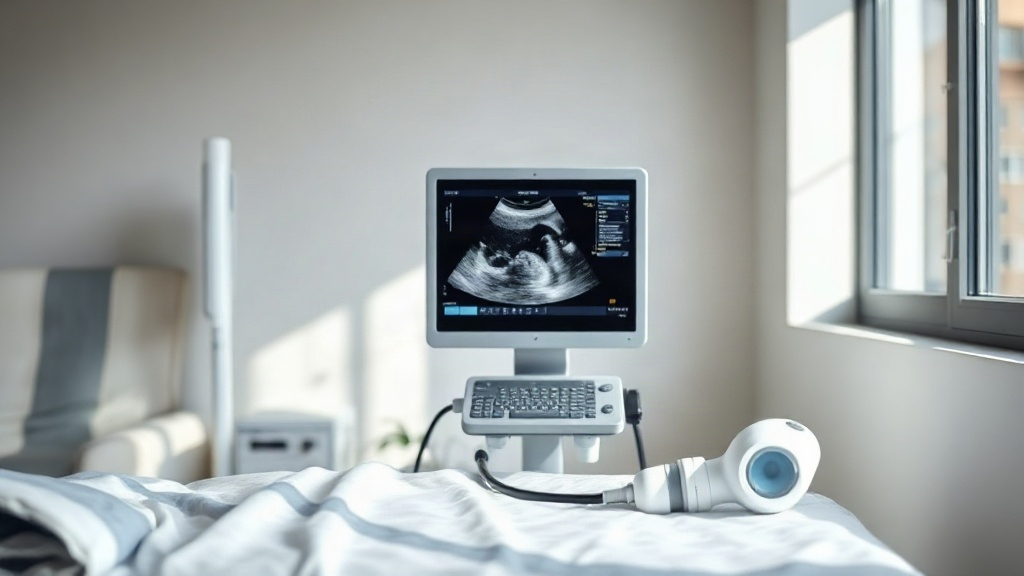
A software recall at six medical sites reveals how imaging errors slip past doctors—and what you should know before your next scan.
KEY STATISTICS
- Six medical imaging facilities issued recalls due to inaccurate measurement software in ultrasound studies.
- Ruler measurement tools in diagnostic imaging software can produce false readings that affect clinical decisions.
- Adults aged 35-70 undergo ultrasounds for organ assessment, tumor monitoring, and vascular health—making measurement accuracy critical to diagnosis.
You arrive for an ultrasound to evaluate a growth, check your thyroid, or assess blood flow. The technician slides the probe across your skin, the doctor reviews the images, and measurements appear on the screen in black and white. You trust those numbers.
Now imagine learning that the ruler used to take those measurements was systematically wrong—and that faulty data shaped your diagnosis. That’s exactly what happened at six medical sites recently, when imaging software designed to measure organs, masses, and vessels was found to deliver inaccurate results. For millions of adults relying on ultrasounds for everything from cancer screening to heart health, this recall raises an uncomfortable question: How often do we catch these errors before they change our medical care?
How ultrasound measurement works
Ultrasound imaging relies on sound waves to create real-time pictures of organs, blood vessels, and soft tissues inside your body. Modern systems use integrated software that not only captures images but also measures them—calculating the size of a nodule, the diameter of a blood vessel, or the dimensions of a kidney stone with digital ruler tools.
- Technicians and radiologists manually place digital markers on ultrasound images to measure structures; software calculates the distance between points.
- Measurement accuracy directly influences clinical decisions—a 2 mm error in a thyroid nodule size can change cancer risk assessment.
- Software calibration depends on proper imaging probe settings and system software updates; outdated or misconfigured systems can compound errors.
- These measurements become part of your medical record and are often compared year-to-year to track changes in size or progression.
Why this recall affects you now
Adults in the 35-to-70 age range are the heaviest users of diagnostic ultrasound for chronic disease monitoring and cancer screening. Your risk of receiving an affected scan depends on which imaging facility you visit and what condition prompted your referral.
- Thyroid, prostate, ovarian, and liver ultrasounds are routine in this age group; size measurements directly guide biopsy and follow-up decisions.
- Vascular ultrasounds (carotid, abdominal aorta) rely on diameter measurements to assess stroke or aneurysm risk—errors delay lifesaving intervention.
- Multiple ultrasounds over years create a baseline; incorrect measurements from recalled software break the continuity of your health records.
- Patients who received scans at affected facilities between the software deployment and recall announcement face uncertain data in their charts.
Signs you may need to verify your ultrasound
- You received an ultrasound scan at a facility between when the affected software was installed and when it was recalled.
- Your imaging report contains measurements that seem inconsistent with how you felt or what your doctor initially suspected.
- Your follow-up plan (biopsy, repeat imaging, or observation interval) depends heavily on a single measurement from a recent scan.
- You notice your current imaging report measurements differ dramatically from a previous scan, with no clear clinical explanation from your doctor.
- You received care at a smaller regional hospital or imaging center rather than a major medical system (where quality checks may be more robust).
- Your doctor recommended delaying treatment based on scan measurements, and you want independent confirmation before proceeding.
What you can do right now
Measurement errors in imaging software aren’t about your diet or exercise habits—they’re a system-level problem. However, you can take concrete steps to protect yourself and advocate for accuracy in your own imaging care.
- Request a written copy of your ultrasound measurements and images; compare them to any previous scans yourself or ask a second radiologist.
- Ask your doctor explicitly: ‘Is this facility part of the recall?’ and request confirmation that software has been updated or replaced.
- If a major treatment decision (biopsy, surgery, or therapy) hinges on one measurement, ask for a second imaging study at a different facility.
- Keep your own health records organized by date and facility; patterns in measurements across years help catch sudden, unexplained shifts.
Your action plan checklist
- Check whether your imaging center appears on the FDA or manufacturer recall list (ask your provider’s patient advocate or quality department).
- Request that your radiologist document the software version and calibration date on your imaging report as a standard practice.
- Schedule a brief call with your ordering physician to discuss whether your recent scan results should be re-evaluated or re-imaged.
- If a critical treatment decision was made based on the affected scan, ask for a follow-up ultrasound at a confirmed unaffected facility.
- Report any imaging inaccuracies you become aware of to your state health department or the FDA’s MedWatch program.
The overlooked role of system audits
Quality assurance and software validation in imaging rarely make headlines, but they quietly shape whether your diagnosis is accurate or dangerously wrong. This recall exposes a gap: many imaging facilities perform routine equipment maintenance but don’t systematically test whether measurement software continues to perform as intended.
- Imaging facilities typically calibrate hardware (ultrasound transducers) regularly but may not validate that software produces correct measurements.
- Recalls often emerge months or years after a software error begins; patients scanned during that gap may never know their data was compromised.
- Independent oversight—a radiologist or physicist double-checking measurement accuracy quarterly—could catch errors before they reach patient care.
- Asking your imaging center about their quality assurance protocol for measurement software sends a signal that accuracy matters and encourages vigilance.
Bottom Line
An imaging software recall at six medical sites is a rare but serious reminder that the number on your ultrasound report isn’t infallible. For adults aged 35 to 70 who depend on ultrasounds for cancer screening, heart health monitoring, and disease surveillance, this is a moment to verify, ask questions, and—if a major decision hangs in the balance—seek a second opinion. Your imaging data should be accurate.
When it isn’t, you have the right to know and the right to insist on correction before it shapes your medical future.
Health Of State — always consult a qualified healthcare provider before making changes to your health routine.
Sources
- Imaging Software at Six Medical Sites Recalled After Ruler Measurements on Ultrasound Studies Came Out Inaccurate — Medical Daily via Google News
- Ultrasound Imaging: Overview and General Guidance — Mayo Clinic
- Medical Device Recalls and Patient Safety — FDA


